

The Backslide
I lived out my teenage years in the late nineties and early noughties, which meant, among other things, dealing with some absolutely insane cultural messaging about what women’s bodies were supposed to look like. This was the era of Kate Moss’s infamous “nothing tastes as good as skinny feels”, of working under the delusion that Renée Zellweger in Bridget Jones’s Diary was fat, and of women’s magazines going out of their way to find unflattering photos of female celebrities and put large red circles around any cellulite they were able to spot. What a time to be alive.
Then, around seven or eight years ago, things began to shift. We started to see influencers of different body sizes and shapes build big platforms online. The concept of Health at Every Size became more widely understood, as did a growing awareness of the anti-fat bias that proliferates in our society (for example, this depressing research demonstrating that women with lower BMIs are more likely to get hired than those with higher BMIs). We also started to see more people on the red carpets of different body sizes, like Nicola Coughlan, Da’Vine Joy Randolph and Megan Stalter - yes please to all of this.
It felt like we had entered a brave new world - we were finally seeing some diversity of body size being publicly celebrated, and with it came the beginnings of a shift away from thinness as the only thing that could be considered beautiful. Hallelujah! I thought. Hopefully my daughter won’t have to grow up in a world that’s constantly ramming unrealistic beauty standards down her throat.
But there, reader, I made a foolish, if understandable, mistake. I assumed that this positive trajectory was only ever going to move in one direction - forward - and that the bad old days of ‘heroin chic’ were safely in the past. However, as we all know, to assume makes an ass out of you and me, and this was brought home last week when I left the office to walk to the station. This walk is less than five minutes and yet, during its course, I saw two things that both enraged and depressed me. The first was a towering ad on the side of a building for Calvin Klein jeans, featuring Dakota Johnson with her top half entirely naked, long hair covering her breasts. This is an advert for JEANS. Why is she naked?! Let me tell you the number of times I have walked out of the house wearing jeans on the bottom and nothing on top - that’s right: zero times.
I hotfooted it to the station, swearing under my breath, only to arrive and spot the alluring Crosstown Doughnuts stand (so far, so good). Next to it, however, was an A-frame promoting its latest baked innovation - their Mother’s Day special: a collagen-infused doughnut. It is a brand partnership with Revive Collagen, a company that sells consumable collagen products that claim to ‘decrease the speed of aging’ and allow women to ‘regain some of that youthful glow’. I guess just giving your mum a box of doughnuts on Mother’s Day doesn’t cut it any more - it needs to come with a baked-in reminder that society hates women who dare to get older.
As I sat on the train home, I felt monumentally depressed. Why are we going backwards? Did we learn nothing from the nineties? Has the small amount of progress that we did manage to make just disappeared in a puff of collagen-infused smoke?
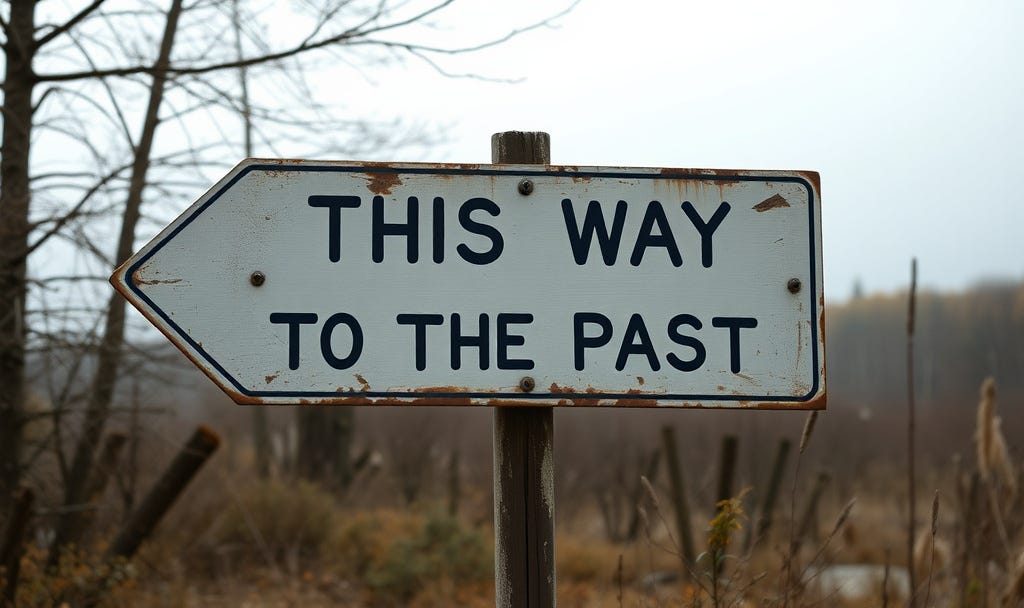
That sense of things sliding backwards isn’t confined to beauty standards. I’ve been noticing the same pattern elsewhere too—particularly in the arts. Looking back to the mid 2010s, there was the whiff of progress in the air: the beginnings of a more diverse workforce and leadership, more and different kinds of new work being programmed, the vague possibility that if you had a good year, you could make ends meet. But now, the data tells a different story. SOLT’s 2026 Theatre in the UK report highlights that 51% of charitable or subsidised theatres expect to operate at a deficit this year, with 17% forecasting substantial shortfalls. It notes that new work sits at the start of a creative pipeline that can lead, for example, to TV smash hits such as Baby Reindeer and Fleabag, or studio shows like Operation Mincemeat transferring to Broadway. However, the report also cites research from the National Theatre’s new work department showing that, between 2014 and 2024, new work on stages outside of London fell by 44%, with a 30% decline within London too.
In terms of the workforce, Baker Richards’s Arts Pay Survey at the end of 2025 highlighted the challenges that this financial instability and corresponding low pay levels creates in terms of inclusion. The report states that “nearly 60% of working-class respondents told the survey they had faced “significant” barriers entering the sector, where the figure for those who do not identify as working class hovers at just over 30% for the same question. Global majority workers were also more likely than their fellow arts professionals to say they had faced considerable obstacles, with approximately 62% saying so, in comparison to 40% of white respondents.”
The reason I am paralleling these two very different situations is because I am interested in the similar feeling that they both create. That feeling, for me, is a mix of frustration and depression - a sense that we have seen the beginnings of progress but it’s now slipping further and further out of our reach. For many, our intentions haven’t changed - we want to programme new work, we want to remove barriers to entry by offering salaries that people can properly live on at all stages of their careers - but our ability to do so is severely constrained by our environment. This feeling of stuckness, of progress stalling, lives in our bodies and our minds - for me, sometimes, it feels like wading through quicksand, or, having swum a little way out into the ocean, being swept back to shore by one particularly vigorous wave.
So what do we actually do with that feeling? That sense that progress is slipping backwards just when we thought we might be getting somewhere? I don’t have an answer, but I do think that, if we can’t see ourselves as marching forwards, we have to find some other mental frame of reference to encapsulate what we’re doing. Do we hold the flame of progress in our hearts even if we struggle to enact it in practice? Do we make it our mission to highlight the good stuff that is happening and seek to emulate in whole or in part wherever we can? Do we pivot our job towards advocacy, making the case for more investment and highlighting what might be possible if it were present? In a confusing and overwhelming time, our mental framework is everything - if we want to leave our organisation, our sector, our world better than we found it, we need to find a way to envision our role even when circumstances are against us.
This is something I’m still figuring out, but two questions I consistently ask myself are: what are the spheres of my life where I do have influence, and how can I use that influence to move things forwards? If you are a leader, there is at least one sphere where you have power, and you can set yourself the task of finding all the ways, however small, that you can shift your organisation closer to its mission. As for me, I will continue to advocate for the importance of wearing a top alongside a pair of jeans; and, for anyone who buys me a collagen infused product for any kind of celebratory occasion, be prepared to be told where to stick it.